
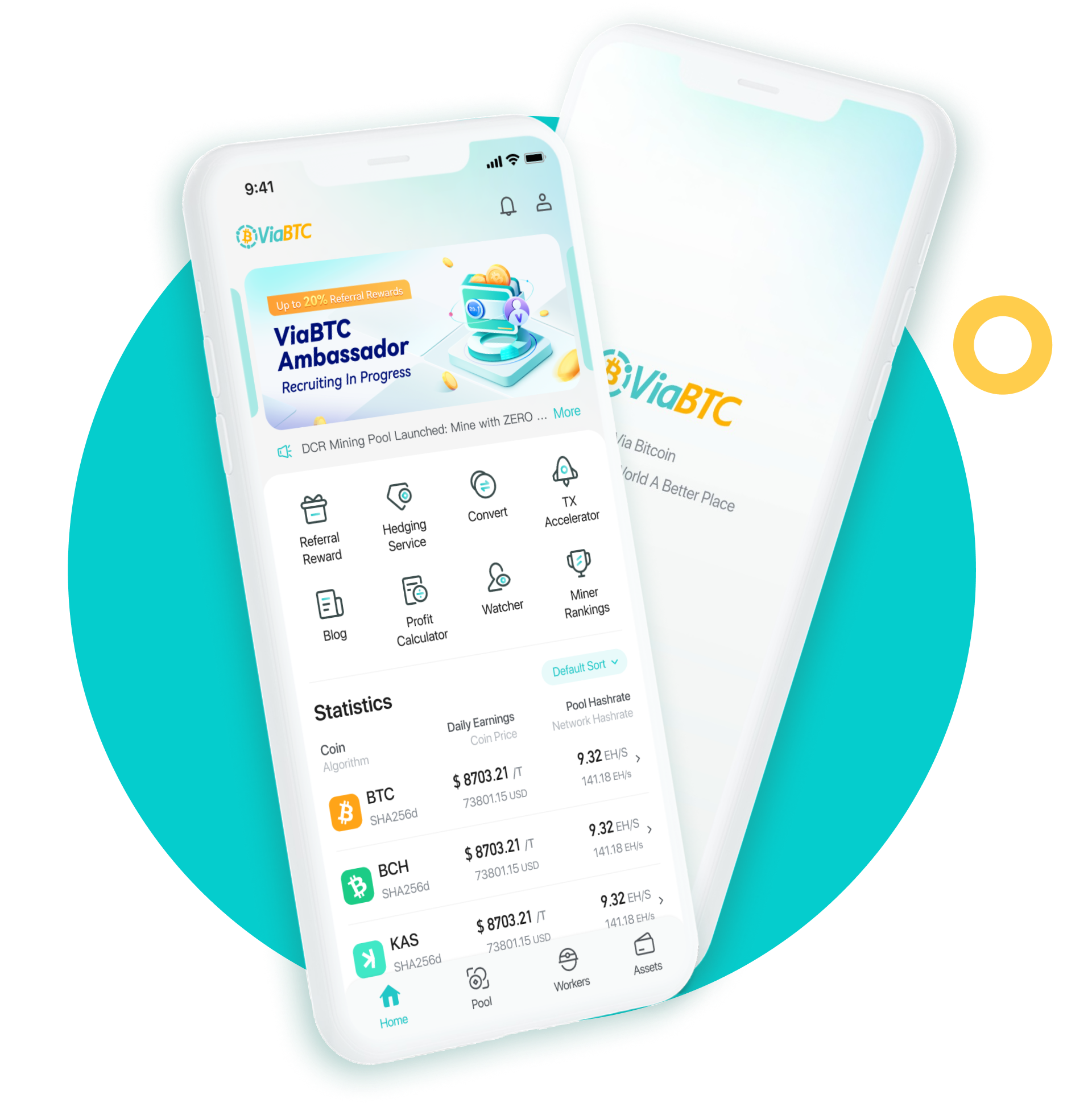
Yes. ViaBTC TX Accelerator can help a valid Bitcoin transaction confirm during heavy congestion because an accepted transaction can receive mining priority instead of relying only on its original fee position in the mempool. The service still depends on block production, so it cannot promise a fixed confirmation time. Bitcoin produces a block about every 10 minutes on average, while ViaBTC’s current free rules require a transaction size of no more than 0.5 KB and a fee rate of at least 0.0001 BTC/KB. In September 2026, its live accelerator page displayed 0 free slots per hour, making availability as important as technical eligibility.
Bitcoin congestion is mostly a competition for limited block space. A transaction can be perfectly valid, visible across the network, and still remain at 0 confirmations because miners have a larger set of higher-paying transactions available. Bitcoin.org states that blocks arrive about once every 10 minutes on average, not once every 10 minutes on a fixed schedule, so a low-fee transaction can miss several blocks even without unusually severe congestion.
That fee competition explains where an accelerator can change the outcome. ViaBTC does not rewrite the transaction or raise the fee recorded inside it; after accepting an acceleration request, the pool can give the existing transaction priority when building a block template. Its live 2026 page says a successful free submission will be prioritized for the next block mined by ViaBTC, while miners outside the participating group remain free to choose their own transactions.
A useful distinction is “accepted for acceleration” versus “confirmed on Bitcoin.” The first is a ViaBTC service status; the second happens only after a valid miner-produced block contains the transaction.
The difference becomes easier to quantify with a simple mining example. If a participating pool hypothetically controls 10% of network hash rate, its chance of finding the next block is about 10%; over six independent block opportunities, the probability of finding at least one is roughly 47%, calculated as 1 − 0.9⁶. That 10% figure is only an illustration, not ViaBTC’s current hash-rate share, but it shows why no accelerator can honestly promise the next network block.
Block timing adds another source of uncertainty. Six Bitcoin blocks are often associated with roughly one hour because 6 × 10 minutes equals 60 minutes, yet Bitcoin.org notes that individual blocks can arrive substantially earlier or later. A user may therefore submit an eligible transaction correctly and still wait beyond the expected interval without any failure in the acceleration mechanism.
ViaBTC’s free service also applies rules before mining priority is even considered. Its current accelerator page lists a maximum transaction size of 0.5 KB and a minimum fee rate of 0.0001 BTC/KB; using 1 BTC = 100,000,000 satoshis, 0.0001 BTC equals 10,000 satoshis, or about 10 satoshis per byte when expressed over a decimal 1,000-byte KB. The service separately rejects unsupported double-spend cases and can fail when a required parent transaction remains unconfirmed.
| Situation | What ViaBTC can do | What still has to happen |
|---|---|---|
| Valid low-fee transaction | Give it mining priority after acceptance | A participating pool must find a block |
| Transaction above 0.5 KB | Free submission may be refused | Paid service or another fee method may be needed |
| Fee below 0.0001 BTC/KB | Free submission fails the listed threshold | User needs another confirmation route |
| Unconfirmed parent | Child may remain blocked | Parent must be handled first |
| Poor propagation | ViaBTC may not find the TXID | Transaction needs to reach its mempool |
| Double spend | Acceleration is not supported | Conflict must be resolved |
The parent-transaction case matters because Bitcoin spends UTXOs rather than account balances. Suppose transaction B spends an output created by unconfirmed transaction A; B cannot simply appear in a block while its required input history is absent. ViaBTC’s 2024 support material specifically tells users with an unconfirmed previous transaction to accelerate the earlier transaction first or consider paid acceleration, so submitting only the child TXID may not address the actual ordering problem.
Propagation can produce a different symptom with the same “stuck” appearance. ViaBTC’s support page says a “Tx hash not found” response may occur when its mempool has not received the transaction, and it recommends checking the hash and broadcasting the transaction before acceleration. In that case, paying more for priority before the transaction is properly visible would address a different problem than the one preventing processing.
The free quota needs similar care because ViaBTC has published two different figures. Its support article updated in May 2024 says 20 free acceleration chances per hour, but the live accelerator interface checked in September 2026 displays 0 free transactions per hour. A current user should therefore read the number shown on the live service instead of assuming that the 2024 quota remains available.
Paid acceleration removes the need to obtain a free slot, although it does not remove mining uncertainty. ViaBTC’s support documentation says the paid fee is calculated using transaction volume, cryptocurrency price and related conditions; after payment, ViaBTC can notify cooperating mining pools so that a transaction may receive priority when one of those pools produces a block. Payment can be made using BTC, BCH or LTC according to the 2024 documentation.
That wider pool participation can matter more as congestion rises. If, for illustration, one miner represents 8% of total hash rate, its chance of finding at least one block within six block opportunities is about 39%; if cooperating miners together represented 20%, the same six-block probability would be about 74%. Neither percentage describes ViaBTC’s present network share; both show mathematically why access to more participating hash rate can improve probability without creating a time guarantee.
Users should also compare acceleration with Replace-by-Fee. RBF replaces an unconfirmed transaction with another version carrying a higher fee, allowing miners across the network to evaluate the replacement through normal fee selection. A transaction paying 5 sat/vB could, for example, be replaced at a substantially higher rate when the prevailing market has moved above it, provided the wallet and transaction support replacement.
CPFP uses another route. A recipient or sender controlling an output from the unconfirmed parent creates a child with a sufficiently high fee so miners can consider the combined parent-child package. If a 200-vB parent pays 1,000 satoshis and a 150-vB child pays 6,000, the package contains 7,000 satoshis over 350 vB, an average of 20 sat/vB; miners may evaluate that package more favorably than the 5 sat/vB parent alone.
ViaBTC acceleration differs because the original transaction may remain unchanged. For someone who cannot use RBF and does not have a suitable output for CPFP, mining-pool priority provides another route. The service is especially relevant for ViaBTC Crypto Mining users already working within the same mining infrastructure, although accelerator eligibility is based on the submitted transaction rather than simply owning a ViaBTC account.
Transaction size can make the free route unavailable even when the BTC amount being transferred is small. Bitcoin transaction size depends heavily on inputs, outputs and script type, so a transfer spending many UTXOs may exceed 0.5 KB while moving less money than a compact transaction with one input. ViaBTC evaluates the transaction’s data size rather than whether it moves 0.01 BTC, 1 BTC or 10 BTC.
Fee economics also changed after the 2024 Bitcoin halving. At block 840,000 on April 20, 2024, the block subsidy fell from 6.25 BTC to 3.125 BTC, leaving transaction fees as a separate part of miner revenue. Miners therefore still have a financial reason to select transactions that pay more for scarce block space, while an accelerator gives participating miners a separate service-based reason to prioritize an accepted transaction.
| Before submitting | Number to inspect | Why it matters |
|---|---|---|
| Confirmations | 0 vs. 1+ | An already confirmed transaction does not need acceleration |
| Free size limit | ≤0.5 KB | Larger transactions fail the listed free rule |
| Free fee threshold | ≥0.0001 BTC/KB | Lower-fee transactions do not qualify |
| Parent status | 0 confirmations or confirmed | An unconfirmed ancestor can hold the child back |
| Live free quota | 0 shown in Sept. 2026 | Historical quota figures may not match current access |
| Block interval | ~10 minutes average | It is an average, not a confirmation deadline |
One confirmation also should not be confused with accelerator completion time. Bitcoin.org describes 1 confirmation as inclusion in a block, 3 confirmations as a stronger state, and 6 confirmations as a common reference for higher-value transfers; at a 10-minute average interval, those points correspond roughly to 10, 30 and 60 minutes after first inclusion under ordinary timing. The accelerator mainly addresses getting from 0 to the first confirmation.
A paid request should therefore be judged against the cost of waiting, RBF, or CPFP rather than against a promise of instant confirmation. ViaBTC states that acceleration submissions cannot be canceled and are non-refundable, while block-generation timing cannot be estimated because the service still depends on participating pools producing blocks. For a non-urgent transfer, waiting may cost 0 additional satoshis; for a time-sensitive transfer, paying for priority may be preferable to leaving the transaction below the prevailing fee market for several blocks.