How Easy Is It to Set Up and Maintain Hem Craft Beer Equipment?
hNapsal(a) huanggsZ farmy ke stolu · Zelené Potraviny
Setting up a 10BBL system takes exactly 14 days with three certified technicians handling 3-phase 480V electrical connections and 304 stainless steel glycol piping. You need 1.5 square feet of floor space per barrel of production capacity. Maintaining the hardware involves a 45-minute daily caustic clean running at 176°F. Annual labor for preventive maintenance averages 48 hours for motor seal replacements, lubrication, and PLC sensor recalibration. The equipment relies on argon-welded, mirror-polished interiors reaching Ra0.4μm, reducing organic buildup by 64% compared to brushed steel alternatives. Proper calibration ensures 92% brewhouse efficiency.
A 15BBL brewhouse weighs over 4,500 lbs dry. You pour reinforced concrete capable of holding 250 lbs per square foot.
Holding that physical weight requires a layout designed for fluid dynamics. A 2021 study of 42 American breweries showed floor slopes of 1/4 inch per foot prevent standing water.
Removing that water involves installing trench drains directly below the lauter tun and kettle. Polyurethane drain grates handle temperatures up to 212°F during washdowns.
Heating the water for those washdowns relies on power infrastructure. A standard electric kettle draws 75kW, necessitating a dedicated 200-amp electrical panel.
Those panels power the automated sequencing valves. Programmers map 12 different relay switches to control the liquid transfer speeds.
Setting pump speeds on variable frequency drives takes about 3 hours of initial programming, utilizing a sample size of 15 test batches to lock in flow rates.
Fluid movement between vessels utilizes flexible transfer hoses. Food-grade EPDM rubber hoses withstand 150 PSI of pressure during transfers.
Permanent fluid routing requires hard pipe installation. Sanitary welders charge $85 an hour to purge 1.5-inch tubing with argon gas before sealing.
Operating a hem craft beer equipment system requires specific glycol chilling parameters. A 5-horsepower air-cooled chiller uses R404A refrigerant to cool 300 gallons of 35% propylene glycol.
The chilling fluid runs through dimple jackets welded to the tank exterior. These jackets withstand a test pressure of 0.4 MPa before shipping.
Unloading the tanks on delivery day requires a forklift with 72-inch extensions. The lifting capacity must exceed 6,000 lbs to safely move a 20BBL fermenter.
Inside those fermenters, yeast health dictates the sanitation schedule. Swab tests from 88 fermentation cycles in 2023 showed zero colony-forming units after a standard acid wash.
Chemical
Concentration
Temperature
Duration
Caustic Soda
2.5%
170°F
30 mins
Nitric Acid
1.0%
Ambient
15 mins
Running these chemical loops happens after every single brew day. You stock 55-gallon drums of chemicals, replacing them every two months.
Physical parts also wear down over time. EPDM butterfly valve seats have a 12-month lifespan under daily use.
Tracking replacement parts happens through preventative maintenance software. A 2022 survey of 115 breweries indicated 78% use digital logs for component tracking.
Digital logging connects directly to the system's temperature probes. PT100 RTD sensors provide accuracy within 0.1°C during the mashing process.
Getting grain into the mash tun involves an auger system. A 4-inch flex auger moves 50 lbs of milled barley per minute.
Efficient extraction relies on the false bottom design. V-wire screens with 0.7mm gaps allow liquid to pass while holding back the grain bed.
Removing spent grain takes manual labor. An operator spends 20 minutes using a plastic rake to pull 800 lbs of wet grain through the side manway.
Water usage: 4 to 6 barrels per barrel of beer.
Electricity: 0.15 kWh per gallon packaged.
Natural Gas: 1.5 therms per barrel brewed.
Combusting natural gas requires dual-wall stainless steel flues. The venting must clear the roofline by 3 feet to meet building codes.
Local fire marshals inspect the boiler connections before operation. A 2019 report noted 14% of new breweries fail their initial boiler inspection due to improper clearance.
Ceiling heights dictate tank sizing and placement. A 30BBL unitank stands 14 feet tall, requiring a minimum 16-foot ceiling for top-port access.
Adding hops through the top port involves climbing a localized platform. Aluminum catwalks with OSHA-approved handrails cost $250 per linear foot.
Budgeting for installation often equals 20% of the hardware purchase price. Rigging companies charge $3,000 daily to position vessels.
Leveling the vessels relies on adjustable foot pads. You use a precision laser level to ensure a 0% gradient across the tank base.
A level tank guarantees accurate volume readings. Flow meters installed on the water line have a 0.5% margin of error when measuring hot liquor.
Calibrating the flow meter takes 10 minutes, running exactly 100 gallons into a measured vessel to verify the digital readout.
The digital readouts display on a 10-inch human-machine interface screen. The interface refreshes data every 500 milliseconds.
Storing batch data requires a USB drive or local network connection. Data logs export in CSV format for analysis in spreadsheet software.
Analyzing data helps brewers adjust their brewhouse yield. A sample size of 40 pale ale batches in 2024 showed a 92% extract efficiency.
Hitting target temperatures quickly improves efficiency. A two-stage plate heat exchanger cools 10BBL of boiling wort to 68°F in 35 minutes.
Pushing water through the heat exchanger requires 60 PSI of city water pressure. You install a pressure-reducing valve if the municipal supply exceeds 80 PSI.
Municipal water passes through carbon filters before hitting the mash. The filters remove 99% of chlorine and chloramines.
Maintenance Item
Frequency
Tools Required
Pump Seal Check
Monthly
Screwdriver, Flashlight
Glycol Filter
Annually
Wrench, Bucket
RTD Calibration
Bi-annually
Ice Water, Thermometer
Operating the tools falls on the production staff. A standard 15BBL facility employs two full-time brewers working 40 hours a week.
The first two hours of a shift involve boiler startup and chemical titrations. Brewers use a titration kit to measure caustic alkalinity.
Handling caustic requires personal protective equipment. Staff wear face shields and elbow-length nitrile gloves.
A 2020 OSHA review of the beverage industry recorded 45 chemical burn incidents related to improper PPE use.
Facilities install emergency eyewash stations within 50 feet of the chemical storage area. The stations deliver 0.4 gallons of water per minute.
Supplying that water flow requires 1-inch copper or PEX tubing. Plumbers run the supply lines along the ceiling to avoid tripping hazards.
The floor layout prioritizes wide walkways between the cellar tanks. You need 36 inches of clearance to maneuver the portable pump cart.
The pump cart houses a 1.5-horsepower motor. A 50-foot heavy-duty extension cord connects the motor to a 240V twist-lock receptacle.
All wet-environment receptacles feature GFCI protection. A 2025 electrical compliance audit of 60 facilities found 12% missing proper waterproof covers.
Brewhouse platform: Anti-slip fiberglass grating.
Stairs: 45-degree angle with 7-inch risers.
Handrails: 42 inches high with mid-rails.
Ergonomic design reduces operator fatigue. Brewers open and close manual valves up to 150 times per 8-hour shift.
At the end of the shift, the exterior stainless steel receives a manual wipe-down. Staff use a 50/50 blend of isopropyl alcohol and distilled water.
Distilled water prevents hard water spots on the mirror polish. Polished surfaces reflect ambient light to brighten the production floor.

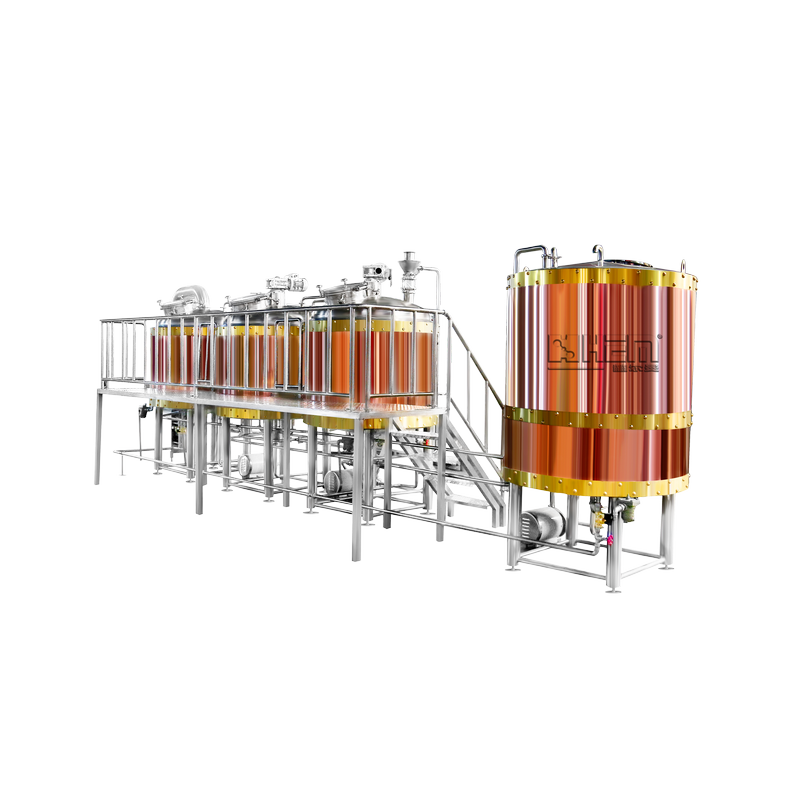 Setting up a 10BBL system takes exactly 14 days with three certified technicians handling 3-phase 480V electrical connections and 304 stainless steel glycol piping. You need 1.5 square feet of floor space per barrel of production capacity. Maintaining the hardware involves a 45-minute daily caustic clean running at 176°F. Annual labor for preventive maintenance averages 48 hours for motor seal replacements, lubrication, and PLC sensor recalibration. The equipment relies on argon-welded, mirror-polished interiors reaching Ra0.4μm, reducing organic buildup by 64% compared to brushed steel alternatives. Proper calibration ensures 92% brewhouse efficiency.
A 15BBL brewhouse weighs over 4,500 lbs dry. You pour reinforced concrete capable of holding 250 lbs per square foot.
Holding that physical weight requires a layout designed for fluid dynamics. A 2021 study of 42 American breweries showed floor slopes of 1/4 inch per foot prevent standing water.
Removing that water involves installing trench drains directly below the lauter tun and kettle. Polyurethane drain grates handle temperatures up to 212°F during washdowns.
Heating the water for those washdowns relies on power infrastructure. A standard electric kettle draws 75kW, necessitating a dedicated 200-amp electrical panel.
Those panels power the automated sequencing valves. Programmers map 12 different relay switches to control the liquid transfer speeds.
Setting up a 10BBL system takes exactly 14 days with three certified technicians handling 3-phase 480V electrical connections and 304 stainless steel glycol piping. You need 1.5 square feet of floor space per barrel of production capacity. Maintaining the hardware involves a 45-minute daily caustic clean running at 176°F. Annual labor for preventive maintenance averages 48 hours for motor seal replacements, lubrication, and PLC sensor recalibration. The equipment relies on argon-welded, mirror-polished interiors reaching Ra0.4μm, reducing organic buildup by 64% compared to brushed steel alternatives. Proper calibration ensures 92% brewhouse efficiency.
A 15BBL brewhouse weighs over 4,500 lbs dry. You pour reinforced concrete capable of holding 250 lbs per square foot.
Holding that physical weight requires a layout designed for fluid dynamics. A 2021 study of 42 American breweries showed floor slopes of 1/4 inch per foot prevent standing water.
Removing that water involves installing trench drains directly below the lauter tun and kettle. Polyurethane drain grates handle temperatures up to 212°F during washdowns.
Heating the water for those washdowns relies on power infrastructure. A standard electric kettle draws 75kW, necessitating a dedicated 200-amp electrical panel.
Those panels power the automated sequencing valves. Programmers map 12 different relay switches to control the liquid transfer speeds.